Winter Olympics 2026: What is the difference between bobsleigh, skeleton and luge?
Winter Olympics 2026: What is the difference between bobsleigh, skeleton and luge?
As the countdown to the Milan Cortina 2026 Winter Olympics begins, millions of viewers worldwide prepare to witness the thrill of the "sliding sports." These high-speed disciplines—bobsleigh, skeleton, and luge—are arguably the most heart-pounding events of the Games. However, for the casual viewer, they often blur into one confusing display of ice, metal, and gravity.
I remember attending a World Cup sliding event a few years ago. I stood near the finish line, and the speed was incomprehensible. A luge athlete zipped past, followed moments later by a thunderous four-man bobsleigh. While both were fast, the difference in sound, movement, and athlete exposure was staggering. The core difference isn't just in speed; it's in physics, position, and control.
Understanding these distinctions is crucial to appreciating the unique bravery and skill required for each sport. If you want to know why one athlete goes head-first while another goes feet-first on their back, this detailed guide is for you.
The Crucial Distinction: Rider Position and Direction
The easiest way to tell the three sliding sports apart during the Winter Olympics coverage is by observing the rider's body position on the sled and the direction they are traveling. This simple physical arrangement dictates everything from safety gear to steering mechanism and overall performance.
These gravity-powered sports are all run on the same banked, iced track (known as a "run"), but the sleds and their crews are engineered for drastically different experiences.
Luge: The Ultimate Test of Aerodynamics (Feet First, Face Up)
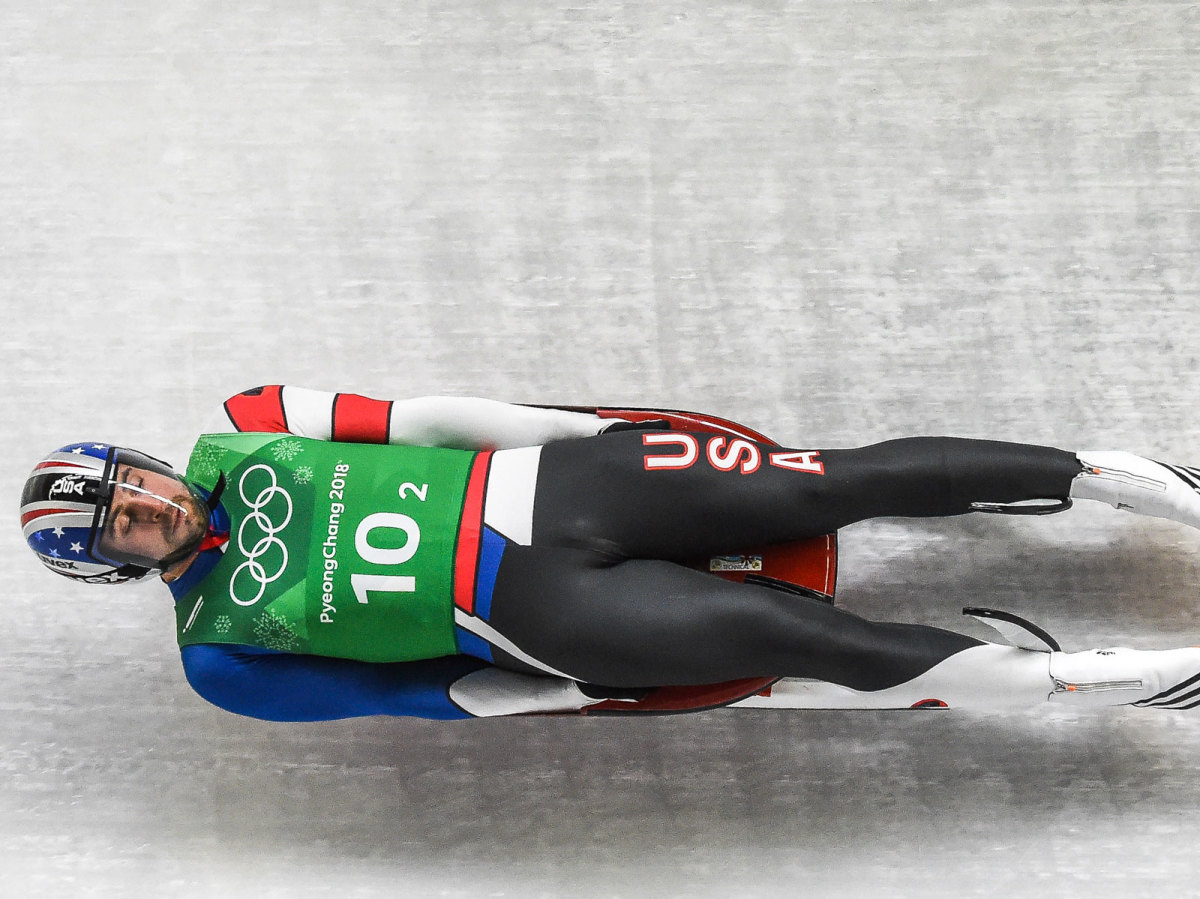
Luge is often considered the fastest and most dangerous sliding sport because of the extreme vulnerability of the rider and the minimal control they possess. The word "luge" itself is French for "sledge."
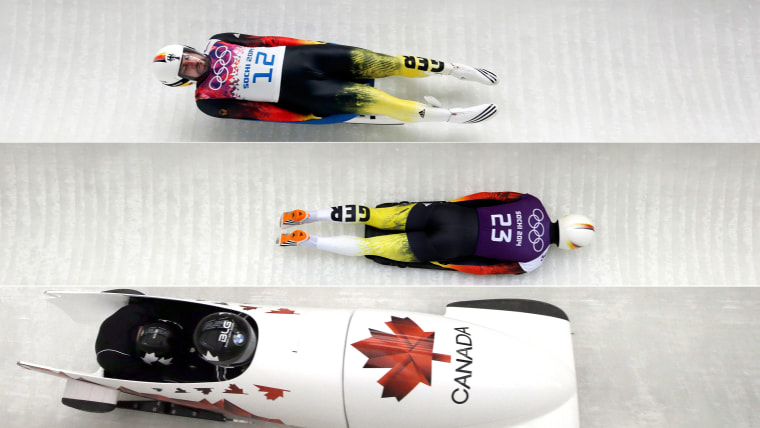
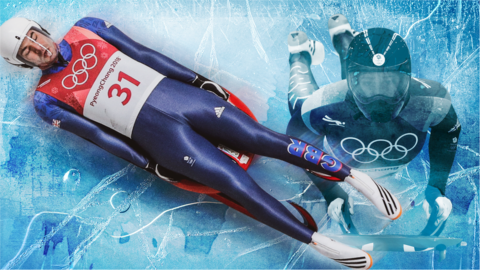
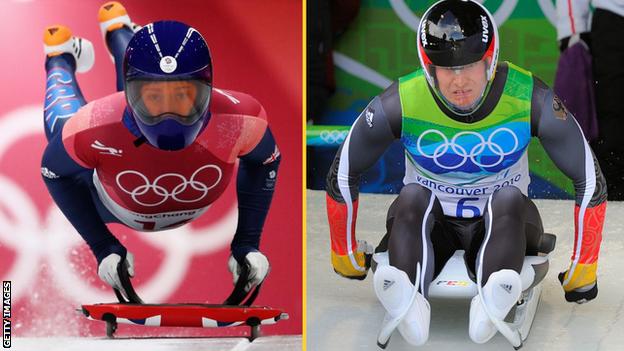
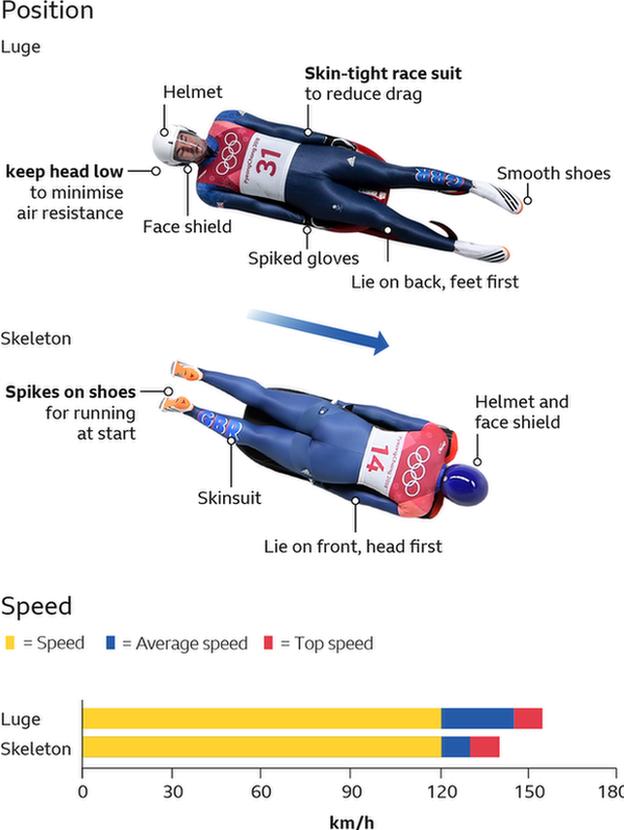
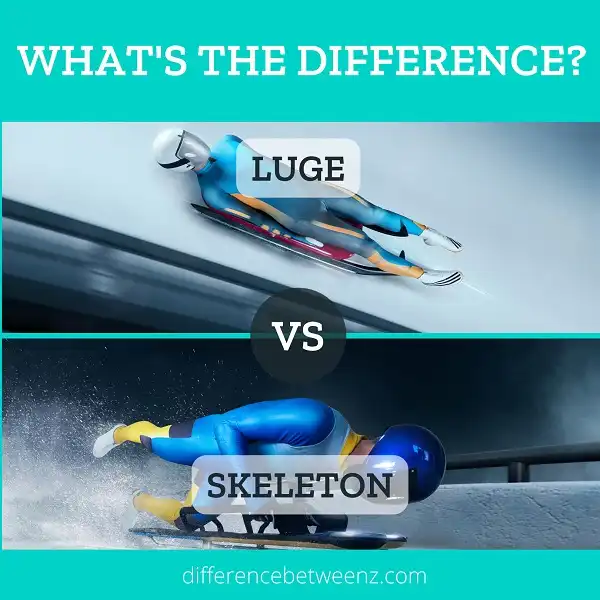
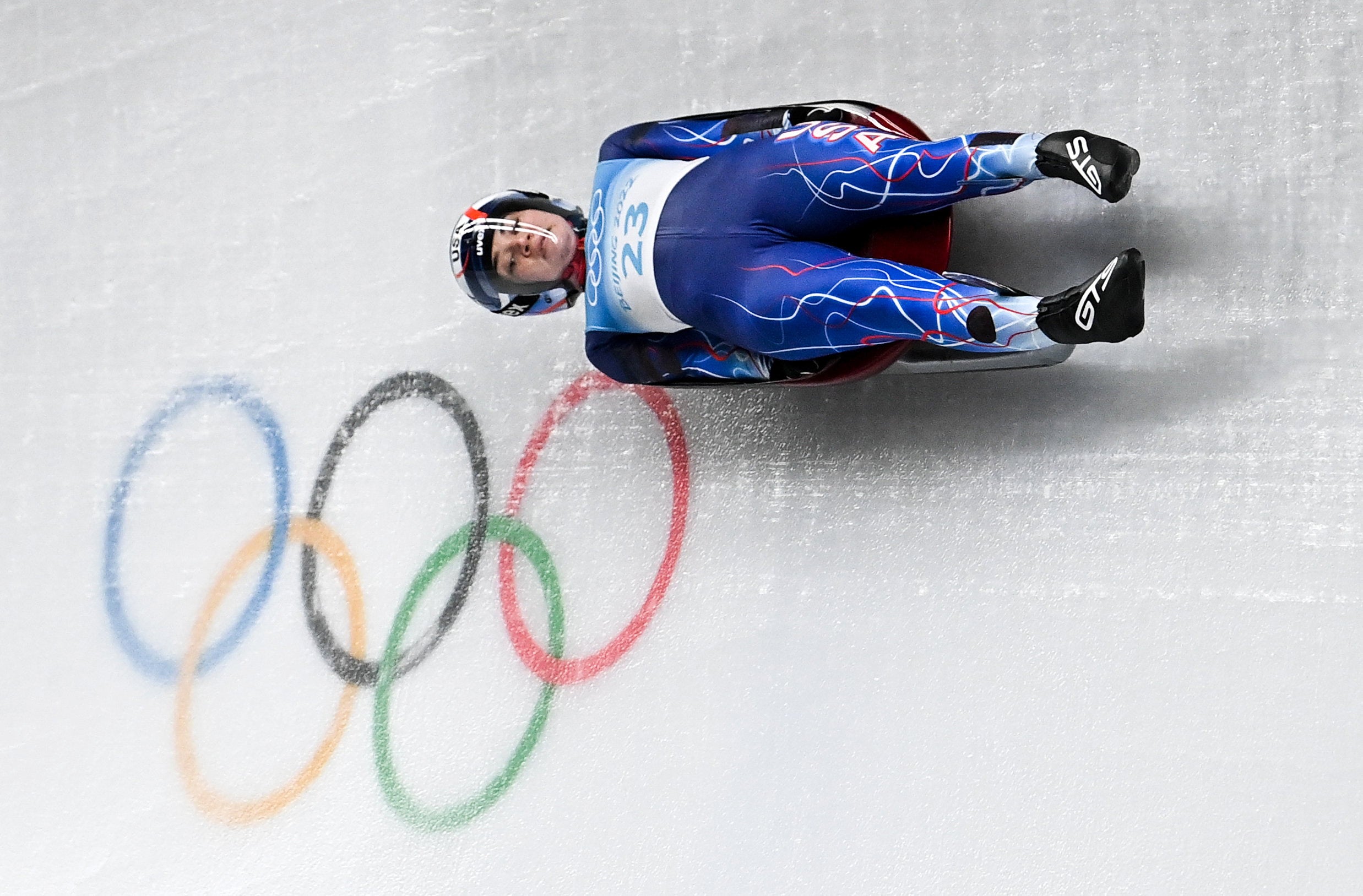
- Position: The athlete lies on their back (supine position), feet first, facing the sky.
- Steering: Control is achieved through subtle shifts in weight, and by pressure applied to the runners using the calves and shoulders.
- Start: Luge athletes begin the race by sitting on the sled and using spiked gloves to paddle furiously down the first few meters of the track, gaining initial velocity before gravity takes over.
- Events: Singles (Men's and Women's), Doubles, and the Team Relay.
Because the Luge athlete's body is completely exposed and aerodynamic drag is minimized, they achieve incredibly high speeds—often peaking near 90 mph (145 km/h) with almost no physical protection between them and the ice.
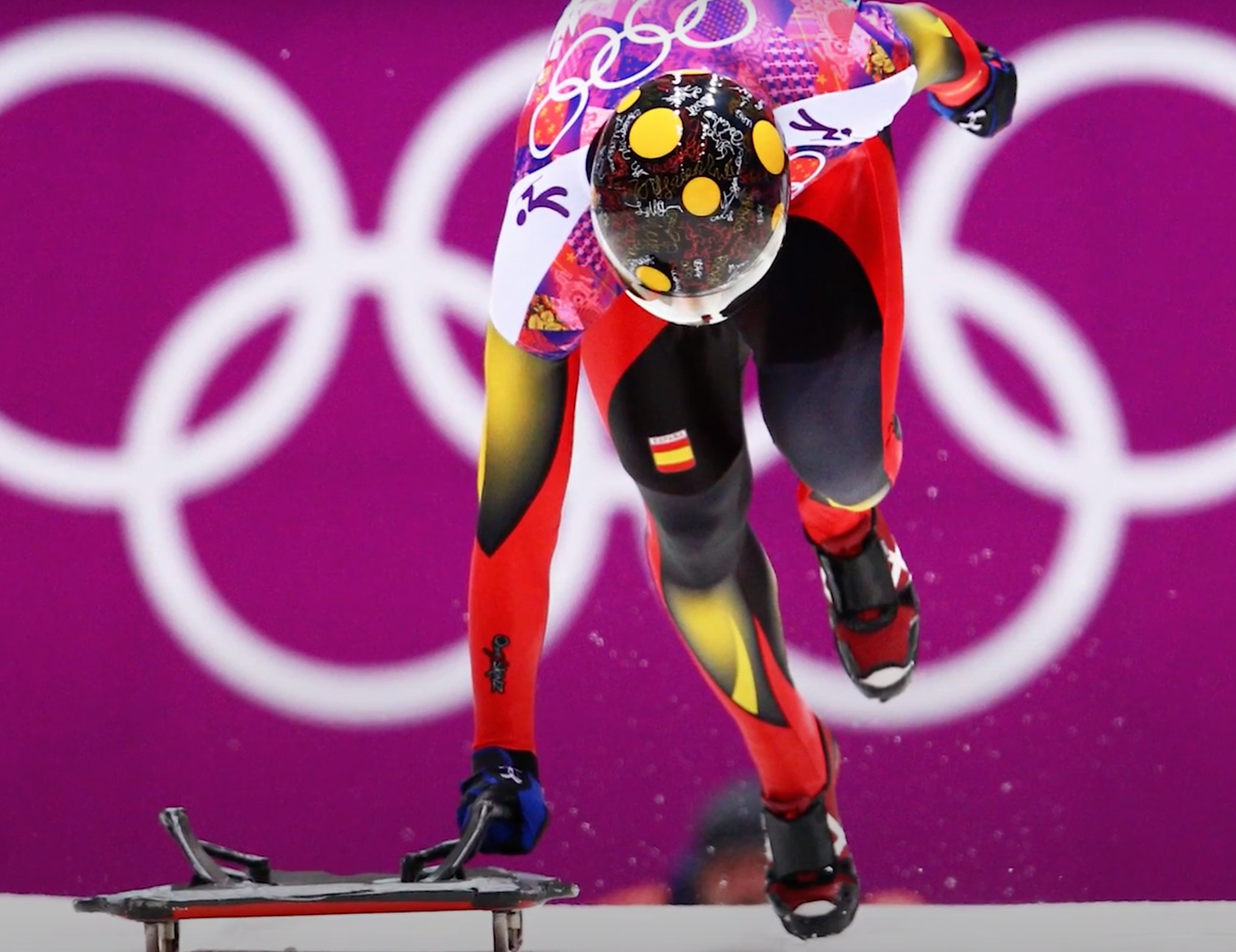
Skeleton: Head-First Plunge (Head First, Face Down)
Skeleton is perhaps the most visually jarring and intimidating of the three. It is unique because the athlete travels head-first down the run. The name "skeleton" reportedly comes from the original bare-bones metallic look of the first sleds used in St. Moritz.
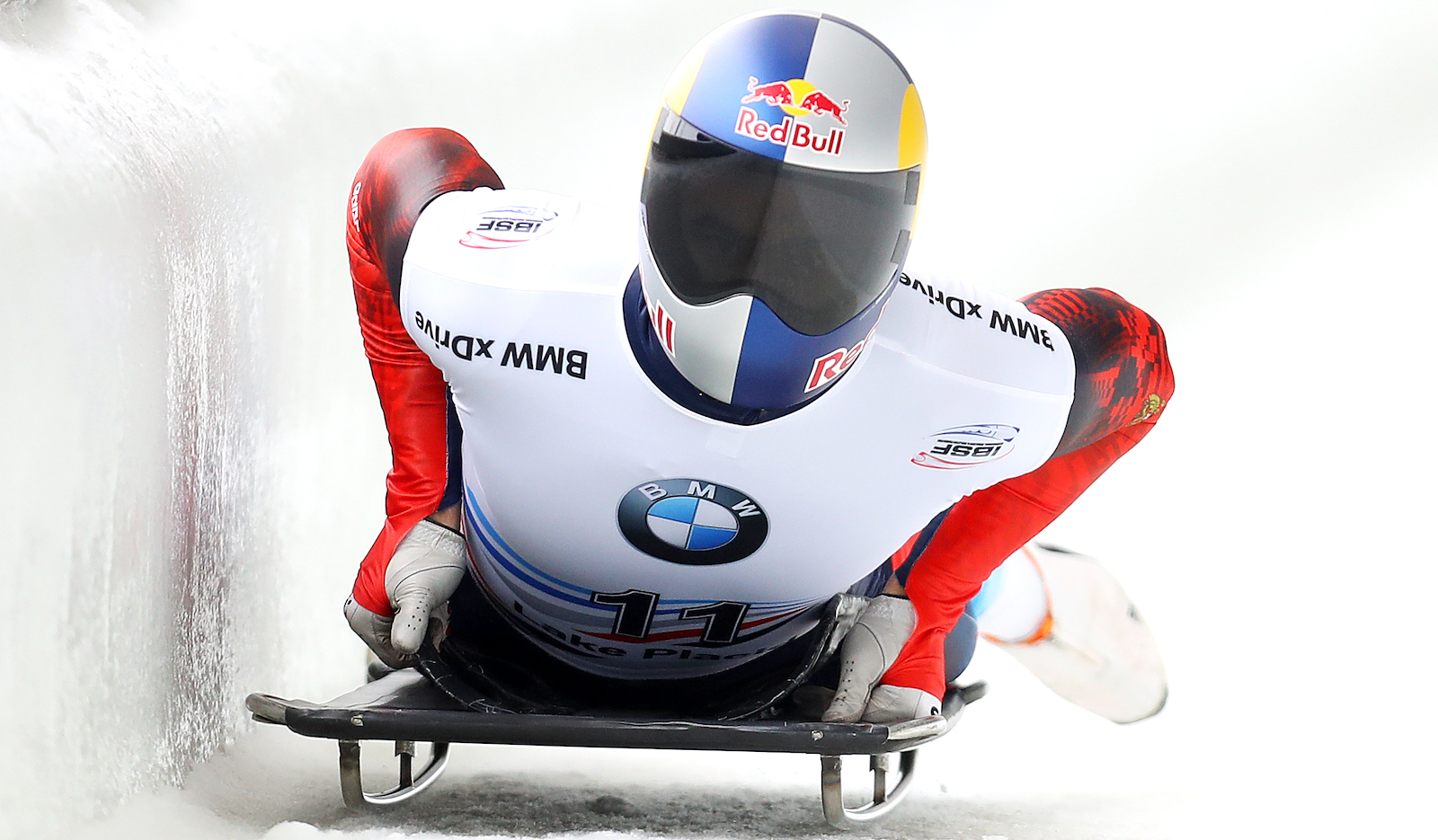
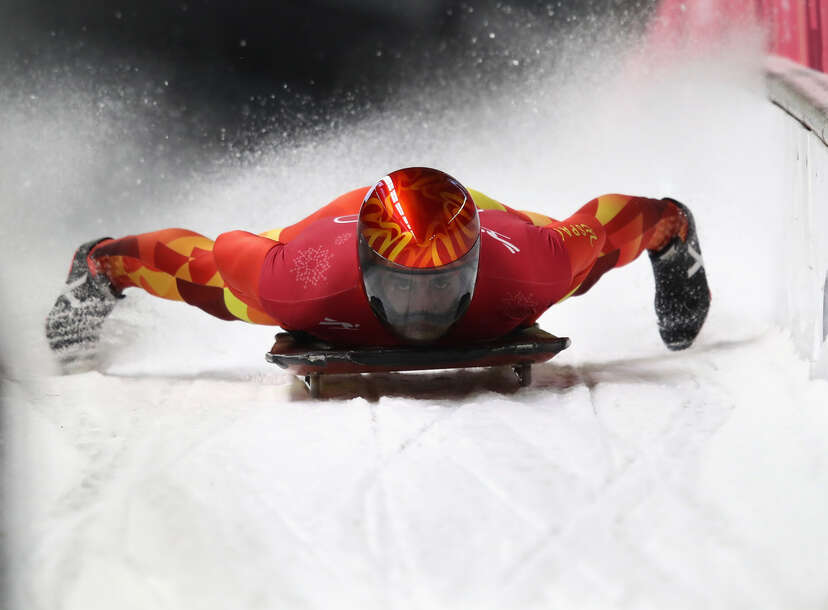
- Position: The athlete lies prone on their stomach, head first, facing the ice.
- Steering: Athletes steer by making minute shifts in weight and using specialized shoes to drag or tap the ice lightly on the inside of curves. Since the sled has no mechanical steering mechanism, the athlete's body is the primary steering apparatus.
- Start: The skeleton requires the most explosive start. Athletes sprint alongside the sled for 20 to 50 meters before leaping onto it. This running start is crucial for maximizing speed early on.
- Events: Men's Singles and Women's Singles.
The sensation of traveling head-first at speeds up to 80 mph (130 km/h), only inches above the ice, while experiencing crushing G-forces in the turns, is what makes skeleton one of the most adrenaline-fueled events at the Winter Games.
Bobsleigh: The Ice Missile (Feet First, Sitting/Crouching)

Bobsleigh, often called "bobsled," is the most complex and technologically advanced of the sliding sports. It is the F1 racing of the ice track, requiring teamwork and precise mechanics. It's the only one of the three where athletes are enclosed in a fiberglass shell.
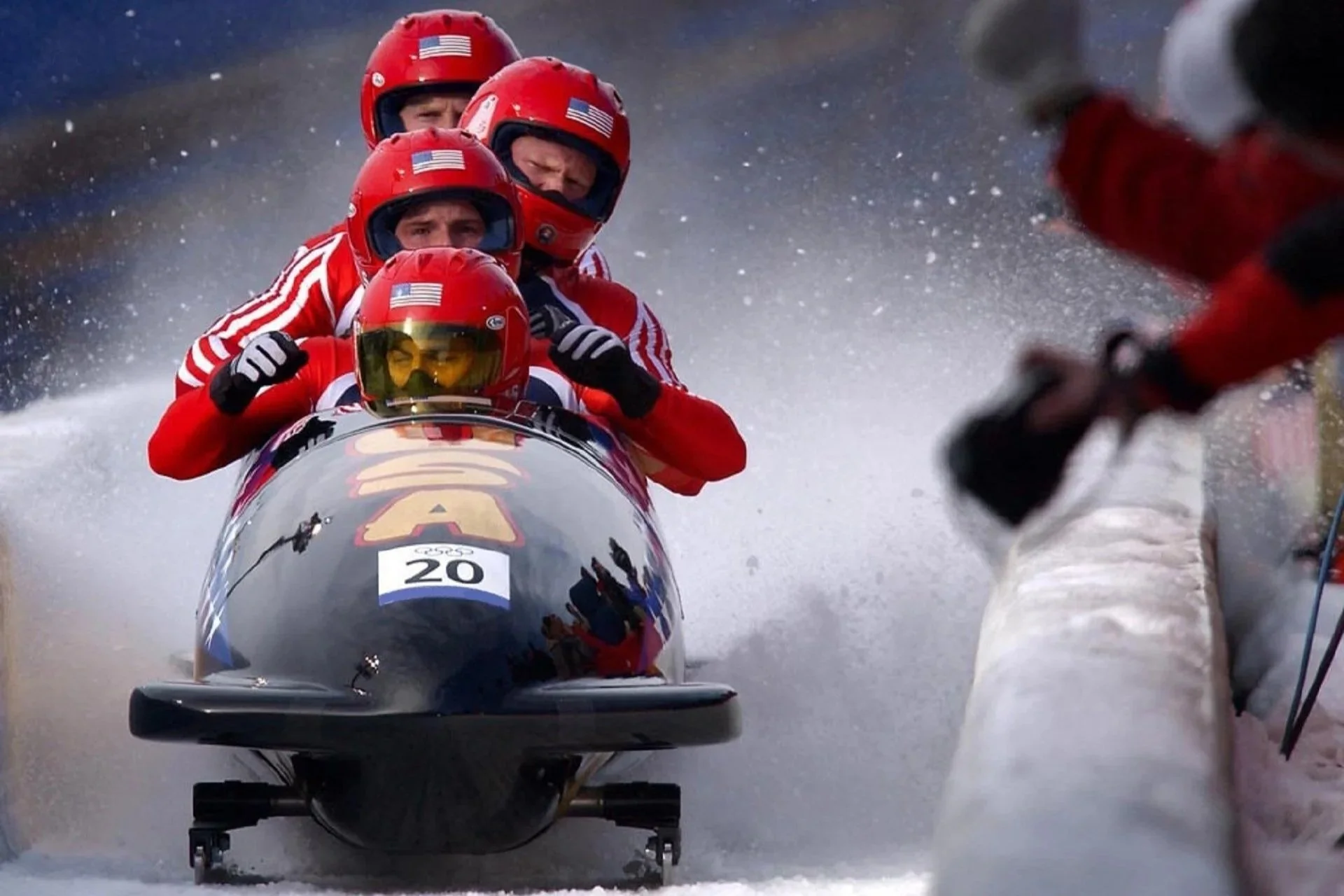
- Position: The crew is seated or crouched inside the streamlined fiberglass and steel shell, traveling feet first.
- Steering: The pilot (driver) steers the front axle using a rope or D-ring system within the cockpit. Steering inputs are measured in millimeters, as small movements can have massive consequences at speed.
- Start: The famous "push start" is a synchronized team effort. The push athletes sprint rapidly, pushing the heavy sled before piling inside for the ride down. A powerful start is often the difference between winning and losing.
- Events: Two-Man, Four-Man, Women's Monobob (single athlete), and Women's Two-Person.
Bobsleigh teams rely heavily on aerodynamics, weight distribution, and the sheer power of the push athletes to gain speed. Due to the combined mass of the crew and the highly streamlined design, bobsleigh typically achieves the highest terminal velocities.
Equipment, Teams, and Track Dynamics: Why Size Matters
While the basic objective remains the same—get from the top to the bottom of the track as fast as possible—the sheer physical scale and technical requirements of the equipment vary dramatically across the three disciplines.
Team Composition
Luge and Skeleton are primarily individual sports, emphasizing singular focus and control, whereas Bobsleigh is a team event that demands flawless synchronization.
- Bobsleigh: Requires 2 to 4 athletes (pilot, brakeman, and sometimes two push crew members). The combined mass of the crew and sled often approaches the maximum allowed weight limit to maximize gravitational speed.
- Luge: Typically 1 or 2 athletes. Doubles require incredible coordination, as one athlete lies on top of the other, steering with minimal vision.
- Skeleton: Always 1 athlete.
The Sleds: Engineering for Speed
The sleds themselves illustrate the core difference in approach to high-speed movement. Luge focuses on minimizing friction; Skeleton focuses on stability; and Bobsleigh focuses on streamlining and initial push power.
- Luge Sled: Simple, low-profile sleds made of fiberglass and steel runners. They have handles for the initial paddle and foot rests, but virtually no mechanical parts. The runners (steel blades) are critical and often heated slightly before races.
- Skeleton Sled: A heavy, simple steel frame with polished steel runners. It features handles for the push start but no sophisticated fairings or cowlings. Padding is minimal, maximizing the feel of the ice.
- Bobsleigh Sled: A technological marvel. It is encased in a highly aerodynamic fiberglass shell (the cowl). It has a steerable front axle, shock absorbers, and, uniquely among the three, a mechanical brake used exclusively *after* crossing the finish line to slow the large mass.
Speed, G-Force, and the Thrill of Steering
Speed is the defining characteristic of these events, but the way athletes handle the velocity and the forces generated are vastly different. The complexity of the track geometry ensures that speed and G-force peak in different ways for each sport.
Terminal Velocity Comparison
While the tracks are identical, the mass, aerodynamics, and starting technique result in different top speeds.
- Bobsleigh: Typically the fastest overall, often hitting 95 mph (153 km/h), especially in the Four-Man event, due to the enormous combined mass and the powerful initial push.
- Luge: Comes a very close second, often exceeding 90 mph (145 km/h). Due to the incredibly low profile and exposure, the perception of speed is arguably the greatest here.
- Skeleton: Generally the slowest, peaking around 80-85 mph (130-137 km/h). The head-first, prone position creates slightly more aerodynamic drag than the supine luge position.
Handling G-Force
G-force, the measurement of acceleration relative to gravity, is severe in all three, especially in the high-banked curves designed to keep the sleds on the track.
- Bobsleigh: Generates the highest lateral G-forces—up to 5G—due to the heavier mass entering sharp turns. This force pushes the crew violently into the side of the cockpit, requiring immense neck and core strength.
- Skeleton: Athletes experience significant compression forces as they enter turns, often feeling their body weight increase three to four times. The head-first position makes spatial awareness particularly challenging.
- Luge: Though lighter, the G-forces are intense. Athletes must hold their heads up against these forces, straining neck muscles, all while maintaining absolute stillness to preserve aerodynamic flow.
The Role of Braking
Perhaps the most terrifying similarity is the lack of meaningful control once the run starts. In both luge and skeleton, there is absolutely no way to slow down safely during the race run itself. Any attempt to use a foot or hand as a brake would likely result in catastrophic injury and disqualification.
Only the bobsleigh contains a brake—a drag mechanism operated by the brakeman—but this is reserved strictly for stopping the sled in the runoff area after the finish line. On the competitive run, all three sports are entirely governed by gravity and precise steering input.
As we anticipate the excitement of the 2026 Winter Olympics in Milan Cortina, keep these key differences in mind. Whether you're watching the synchronized sprint of the four-man bobsleigh, the terrifying speed of the head-first skeleton plunge, or the subtle artistry of the luge athlete navigating a high-speed curve, you are witnessing peak athletic control over the raw power of gravity.
Each discipline demands a unique blend of strength, precision, and fearlessness. Now you know exactly what you are watching, and you can truly appreciate why the athletes of these sliding sports are among the bravest competitors on ice.
Winter Olympics 2026: What is the difference between bobsleigh, skeleton and luge?
Winter Olympics 2026: What is the difference between bobsleigh, skeleton and luge? Wallpapers
Collection of winter olympics 2026: what is the difference between bobsleigh, skeleton and luge? wallpapers for your desktop and mobile devices.
Captivating Winter Olympics 2026: What Is The Difference Between Bobsleigh, Skeleton And Luge? Image Art
This gorgeous winter olympics 2026: what is the difference between bobsleigh, skeleton and luge? photo offers a breathtaking view, making it a perfect choice for your next wallpaper.
Dynamic Winter Olympics 2026: What Is The Difference Between Bobsleigh, Skeleton And Luge? Photo Digital Art
This gorgeous winter olympics 2026: what is the difference between bobsleigh, skeleton and luge? photo offers a breathtaking view, making it a perfect choice for your next wallpaper.

Vivid Winter Olympics 2026: What Is The Difference Between Bobsleigh, Skeleton And Luge? Photo Photography
Explore this high-quality winter olympics 2026: what is the difference between bobsleigh, skeleton and luge? image, perfect for enhancing your desktop or mobile wallpaper.

High-Quality Winter Olympics 2026: What Is The Difference Between Bobsleigh, Skeleton And Luge? View in 4K
Experience the crisp clarity of this stunning winter olympics 2026: what is the difference between bobsleigh, skeleton and luge? image, available in high resolution for all your screens.
Detailed Winter Olympics 2026: What Is The Difference Between Bobsleigh, Skeleton And Luge? Picture for Mobile
Discover an amazing winter olympics 2026: what is the difference between bobsleigh, skeleton and luge? background image, ideal for personalizing your devices with vibrant colors and intricate designs.
High-Quality Winter Olympics 2026: What Is The Difference Between Bobsleigh, Skeleton And Luge? View in HD
Experience the crisp clarity of this stunning winter olympics 2026: what is the difference between bobsleigh, skeleton and luge? image, available in high resolution for all your screens.
Vibrant Winter Olympics 2026: What Is The Difference Between Bobsleigh, Skeleton And Luge? Landscape Art
Transform your screen with this vivid winter olympics 2026: what is the difference between bobsleigh, skeleton and luge? artwork, a true masterpiece of digital design.

Lush Winter Olympics 2026: What Is The Difference Between Bobsleigh, Skeleton And Luge? Capture Art
Immerse yourself in the stunning details of this beautiful winter olympics 2026: what is the difference between bobsleigh, skeleton and luge? wallpaper, designed for a captivating visual experience.
Amazing Winter Olympics 2026: What Is The Difference Between Bobsleigh, Skeleton And Luge? Landscape in HD
Discover an amazing winter olympics 2026: what is the difference between bobsleigh, skeleton and luge? background image, ideal for personalizing your devices with vibrant colors and intricate designs.
Beautiful Winter Olympics 2026: What Is The Difference Between Bobsleigh, Skeleton And Luge? Artwork Concept
Transform your screen with this vivid winter olympics 2026: what is the difference between bobsleigh, skeleton and luge? artwork, a true masterpiece of digital design.
Spectacular Winter Olympics 2026: What Is The Difference Between Bobsleigh, Skeleton And Luge? Scene Photography
Find inspiration with this unique winter olympics 2026: what is the difference between bobsleigh, skeleton and luge? illustration, crafted to provide a fresh look for your background.
Vivid Winter Olympics 2026: What Is The Difference Between Bobsleigh, Skeleton And Luge? Moment Photography
Explore this high-quality winter olympics 2026: what is the difference between bobsleigh, skeleton and luge? image, perfect for enhancing your desktop or mobile wallpaper.

Stunning Winter Olympics 2026: What Is The Difference Between Bobsleigh, Skeleton And Luge? Image Photography
Immerse yourself in the stunning details of this beautiful winter olympics 2026: what is the difference between bobsleigh, skeleton and luge? wallpaper, designed for a captivating visual experience.
Dynamic Winter Olympics 2026: What Is The Difference Between Bobsleigh, Skeleton And Luge? Capture Digital Art
This gorgeous winter olympics 2026: what is the difference between bobsleigh, skeleton and luge? photo offers a breathtaking view, making it a perfect choice for your next wallpaper.
/origin-imgresizer.tntsports.io/2022/02/11/3312464-67729548-2560-1440.jpg "High-Quality Winter Olympics 2026: What Is The Difference Between Bobsleigh, Skeleton And Luge? Moment in 4K")
High-Quality Winter Olympics 2026: What Is The Difference Between Bobsleigh, Skeleton And Luge? Moment in 4K
Discover an amazing winter olympics 2026: what is the difference between bobsleigh, skeleton and luge? background image, ideal for personalizing your devices with vibrant colors and intricate designs.
Beautiful Winter Olympics 2026: What Is The Difference Between Bobsleigh, Skeleton And Luge? Picture Art
Experience the crisp clarity of this stunning winter olympics 2026: what is the difference between bobsleigh, skeleton and luge? image, available in high resolution for all your screens.

Vibrant Winter Olympics 2026: What Is The Difference Between Bobsleigh, Skeleton And Luge? View Illustration
Discover an amazing winter olympics 2026: what is the difference between bobsleigh, skeleton and luge? background image, ideal for personalizing your devices with vibrant colors and intricate designs.
/origin-imgresizer.tntsports.io/2022/02/05/3304257-67565408-2560-1440.jpg "Serene Winter Olympics 2026: What Is The Difference Between Bobsleigh, Skeleton And Luge? Capture Collection")
Serene Winter Olympics 2026: What Is The Difference Between Bobsleigh, Skeleton And Luge? Capture Collection
Experience the crisp clarity of this stunning winter olympics 2026: what is the difference between bobsleigh, skeleton and luge? image, available in high resolution for all your screens.

Lush Winter Olympics 2026: What Is The Difference Between Bobsleigh, Skeleton And Luge? Abstract in HD
Find inspiration with this unique winter olympics 2026: what is the difference between bobsleigh, skeleton and luge? illustration, crafted to provide a fresh look for your background.
Serene Winter Olympics 2026: What Is The Difference Between Bobsleigh, Skeleton And Luge? Background Nature
Experience the crisp clarity of this stunning winter olympics 2026: what is the difference between bobsleigh, skeleton and luge? image, available in high resolution for all your screens.
Download these winter olympics 2026: what is the difference between bobsleigh, skeleton and luge? wallpapers for free and use them on your desktop or mobile devices.
0 Response to "Winter Olympics 2026: What is the difference between bobsleigh, skeleton and luge?"
Post a Comment